
 As a short woman myself, I totally understand the desire to wear a pair of high heeled shoes. Not only does it make you taller so you can look people in the eye, instead of talking to their chin, but the right pair of heels can make your legs look longer, your calves more defined, and totally complete your killer outfit. Wearing a pair of heels every once in a while for a special occasion is absolutely fine, but if you find yourself wearing heels all day every day – at work, driving, walking, dancing – you might be doing more damage than you think.
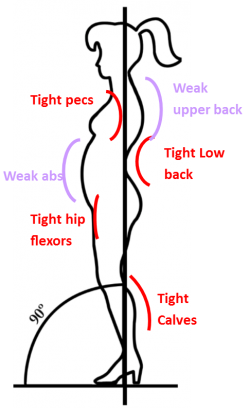
When we stand on flat ground, all our joints and limbs should be positioned to optimise muscle balance and minimise stress on joints and our body is at 90° compared to the ground. If we stand on a steep hill we need to adjust our body position to maintain our balance – we arch our low back causing our belly to poke forward and throwing our pelvis out of alignment. We put additional stress on our knees and the balls of our feet as we lean back into the hill to avoid falling over.
Standing in a pair of high heels is like standing on a steep hill – the higher the heels, the steeper the hill. When we’re performing movements like walking, bending, twisting, dancing – our poor posture puts lots of additional stress on our major joints.
The result from long periods of high heel wearing include over tight calf muscles, hip flexors, low back and chest muscles, and then weakness in abdominals and upper back muscles. This tightness can cause long-term changes to your posture, which result in inflammation and tension, headaches, low back pain, changed gait, loss of mobility in ankles and lower back injuries.
What can you do?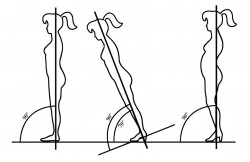
Let’s face it, sometimes it’s worth the risk and we’re going to wear heels anyway. But there are some things you can do to reduce the negative impacts.
- Avoid wearing high heels for long periods – if you’re going to a party or an event where there will be dancing or lots of walking later in the evening, bring a pair of flats to change into.
- Stretch your calf and lower back muscles before and after wearing heels
- Try to choose shorter heels
- Have a variety of shoes, and vary your day-to-day footwear
- Complete regular exercise routines to help strengthen your weaker muscles and maintain good core strength, stability, and endurance.